It was an honor to recently join Will Crebs on the Under Pressure OutdoorsPodcast to talk about Dark Outdoors® and some of the strange and sometimes dangerous things I’ve investigated over the years.
Will asked a lot of great questions, and I really enjoyed the conversation. It’s always fun to connect with someone who genuinely loves the outdoors and is interested in exploring stories that go beyond the typical hunting and fishing discussion.
One of the things I appreciate about Will’s show is his approach to interviewing people.
“We talk about pretty much anything and everything related to hunting and the outdoors. We have everybody on from regular guys with some great stories to some of the biggest names in the industry, and we try to keep the conversations laid-back and genuine,” Crebs said.
“The idea is that you can listen, learn a thing or two, maybe get a different perspective on something, and have a few laughs along the way,” he said.
That’s exactly the kind of conversation I enjoy.
With Dark Outdoors, my goal has always been to tell stories that are compelling, sometimes unsettling and hopefully make people think a little differently about what can happen in the woods and on the water.
I appreciate Will having me on and giving me the opportunity to share some of that work with his audience.
Be sure to check out Under Pressure Outdoors on your favorite podcast platform, including Apple Podcasts and Spotify. Will is doing some great things, and I think many Dark Outdoors listeners will enjoy his show.
Halloween is going to be extra special this year as Dark Outdoors® reaches a major milestone: 100 episodes!
To celebrate, I’m launching Dark Outdoors Week, featuring six consecutive days of mysteries, strange encounters, horror movie connections and real-life investigations, beginning Monday, October 26, and concluding on Halloween, October 31.
This special week brings together many of the subjects that have made Dark Outdoors such an exciting journey, from creepy childhood experiences and mysterious figures to real predators and the true stories behind some of horror’s most memorable movies.
Here’s the Dark Outdoors Week lineup:
Monday, October 26 — Blood Road: The Grim Reaper and the Road That Bled. I revisit a mysterious Southeast Texas road and the eerie stories that surrounded it when I was growing up, including my own experiences connected to this unsettling location.
Tuesday, October 27 — When the Real Pamela Voorhees Called Me. I share the remarkable story of my friendship with Friday the 13th actress Betsy Palmer, including the first time she called me while I was walking through the woods beside a lake. We’ll also explore real-life summer camp horrors and the legends associated with them.
Wednesday, October 28 — Real-Life Wolfen: Are Wolves Living Just Beyond the City Lights? Inspired by one of my favorite horror movies, 1981’s Wolfen, I investigate real wolves living near cities, the wolves of Chernobyl and the mysterious ghost wolves of Galveston Island.
Thursday, October 29 — The Werewolf Ritual That Terrified Me as a Kid. When I was in elementary school, I discovered an old book containing a disturbing account of a supposed werewolf ritual. What I read frightened me and left a lasting impression. In this episode, I revisit that childhood experience, investigate the folklore surrounding werewolves and explain why I believe people should be cautious about dabbling in occult practices.
Friday, October 30 — The Hooded Ones: New Accounts and Strange Origins. New firsthand accounts of mysterious hooded figures lead us into an investigation of strange encounters and their possible historical origins.
Saturday, October 31 — Episode 100: The Real Jason: The Phantom Killer’s Legacy. On Halloween, we investigate the terrifying 1946 Texarkana Phantom Killer murders and their connection to The Town That Dreaded Sundown. It’s a fitting subject for our landmark 100th episode.
Daily Giveaways During Dark Outdoors Week!
And there’s more!
I’ll be doing giveaways every day during Dark Outdoors Week on the Chester Moore – Higher Calling Wildlife Facebook page!
Be sure to follow the page and check in daily for opportunities to win prizes as we celebrate this special milestone.
Reaching 100 episodes means a great deal to me. Dark Outdoors has allowed me to investigate fascinating mysteries, share extraordinary experiences and explore the sometimes frightening side of the natural world.
I appreciate everyone who has listened, shared episodes, submitted stories and supported the show along the way.
You can find Dark Outdoors® on all major platforms where you listen to podcasts.
Join me October 26–31 for six days of mystery and real-life horror as we count down to Episode 100 on Halloween!
Chester Moore
Follow Chester Moore and Higher Calling Wildlife® on the following social media platforms
Halloween is almost here, and I wanted to share something special with my Dark Outdoors subscribers!
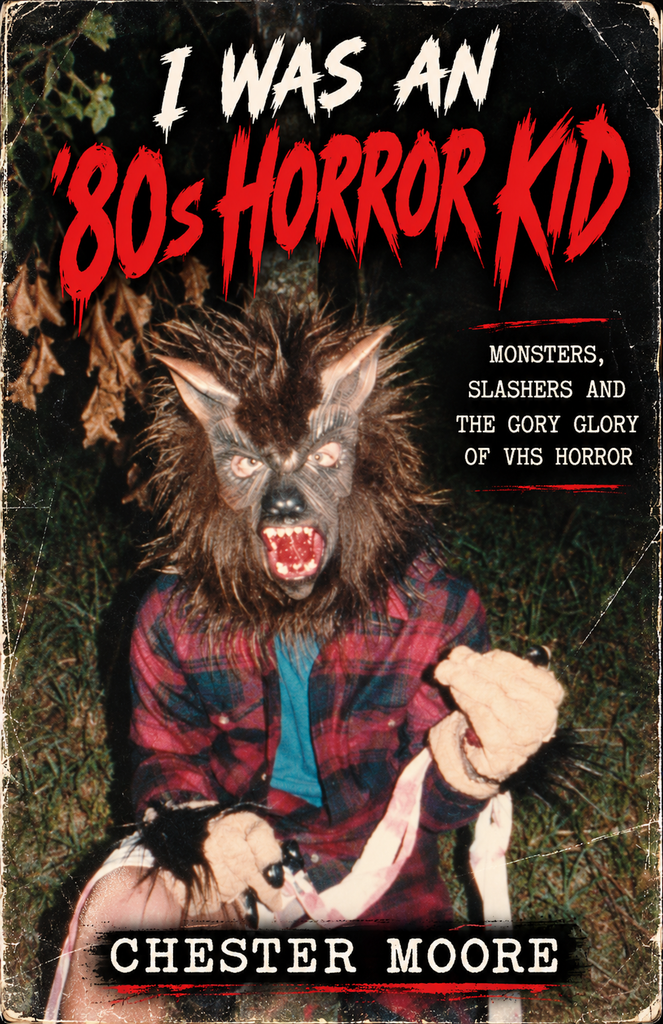
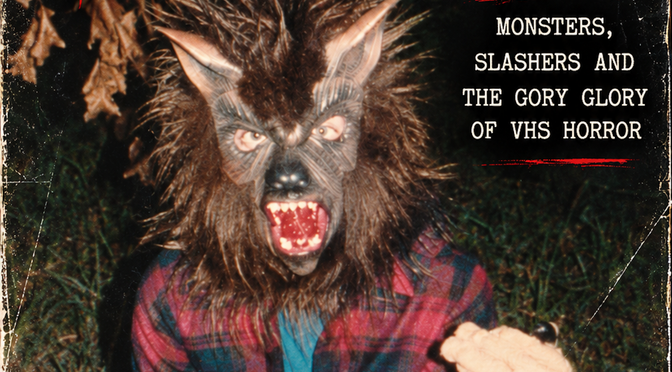
My new book, I Was an ’80s Horror Kid, is a fun, personal journey back to the days of monster movies, Halloween masks, creepy music and growing up in the 1980s.
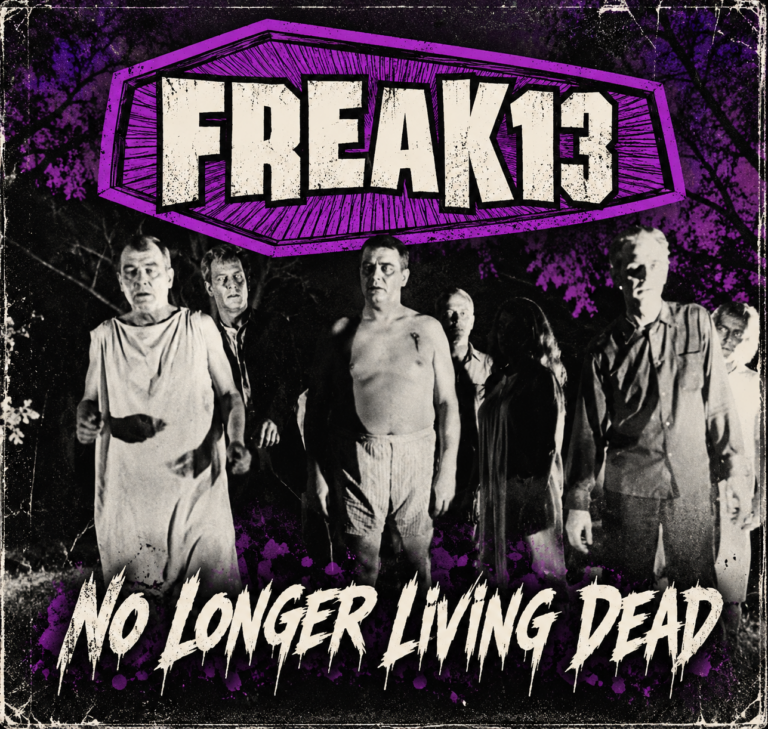
Through Halloween, you can get a personally signed copy of the book PLUS a FREE signed copy of my new Freak13® CD,No Longer Living Dead, for just $20, INCLUDING SHIPPING!
Just include your shipping address with your payment or send it to me privately at chester@chestermoore.com.
We’re also counting down to the 100th episode of Dark Outdoors on Halloween! Thank you for being part of this journey and supporting the show. I truly appreciate it!
God bless!
Chester Moore Dark Outdoors®
Follow Chester Moore and Higher Calling Wildlife® on the following social media platforms
Lyle Blackburn has spent years investigating monsters.
From legendary cryptids and strange creature reports to the dark imagery surrounding his band Ghoultown, Blackburn has built a career exploring the territory where folklore, fear and the unexplained collide.
Now he’s taking on a different kind of monster — one that actually exists.
Blackburn is the latest guest to join Sharks Aren’t So Scary a special public-service campaign from the Gulf Great White Shark Society that brings together horror culture, unusual personalities and shark conservation.
For Dark Outdoors, the connection couldn’t be much better.
When Real Animals Become Monsters
One of the things we regularly explore on Dark Outdoors is the difference between the genuine dangers found in nature and the stories people build around them. Sharks might be one of the greatest examples.
A great white shark is an enormous predatory animal equipped with an incredible sensory system, speed and a mouth full of serrated teeth. There is no reason to pretend an animal like that can’t be dangerous.
But that’s very different from the nearly supernatural monster popular culture has created.
Sharks don’t stalk specific people. They don’t hold grudges. They aren’t plotting their next attack underneath somebody’s fishing boat. Those ideas belong in the same realm as the creature features, horror movies and campfire stories we love discussing.
The real shark is far more interesting.
Enter Lyle Blackburn
That’s what makes Blackburn such a great addition to the campaign.
As an author and cryptid researcher, he has investigated some of America’s most enduring creature legends, including the Fouke Monster and Lizard Man. He’s also the founder and frontman of Ghoultown, whose horror-infused music fits comfortably into the darker world Blackburn has explored throughout his career.
Having someone who spends so much time investigating alleged monsters talk about an animal that has been turned into one by popular culture is a fun twist.
And Blackburn isn’t the first person from the horror world to join the campaign.
Brinke Stevens, Count Drahoon and Sharks
Sharks Aren’t So Scary has already brought some interesting personalities into the Gulf Great White Shark Society’s conservation work.
Horror icon Brinke Stevens, one of the recognizable scream queens to emerge from the 1980s horror scene, participated in the campaign. Long before her career in acting, modeling, writing and directing, Stevens studied marine biology, giving her involvement an interesting connection to the animals themselves.
Horror host Count Drahoon also joined the fun, bringing some old-school creature-feature energy to the project. We even turned him loose on some of the worst shark movies ever made, which is exactly the kind of assignment a horror host deserves.
Now we can add a cryptid researcher and horror musician to the list.
Instead of running away from the horror imagery surrounding sharks, we’re having some fun with it.
We can love Jaws. We can laugh at absurd killer-shark movies. We can enjoy monsters, cryptids, Halloween and everything that comes with horror culture while recognizing that real sharks aren’t movie villains.
That distinction matters.
Dark Outdoors has always operated in similar territory. There are legitimate dangers in wild places. There are also mysteries, legends and stories that become larger with every retelling. Sometimes figuring out which is which is the most fascinating part of the investigation.
Great white sharks don’t need Hollywood’s help to be intimidating.
And they certainly don’t need it to be fascinating.
Watch for more from Lyle Blackburn and the Sharks Aren’t So Scary campaign as we move toward Halloween.
Because the outdoors has a dark side but sometimes we’ve made it darker than it really is.
Chester Moore
Follow Chester Moore and Higher Calling Wildlife® on the following social media platforms
What if scientists could bring back a bird that disappeared from the Earth centuries ago?
And what if the technology developed to accomplish that seemingly impossible feat could also help save endangered species living today?
These are some of the fascinating questions explored in a new episode of Dark Outdoors, featuring an exclusive interview with Dr. Andrew Pask, chief biology officer at Colossal Biosciences and one of the leading scientists working in the emerging field of de-extinction.
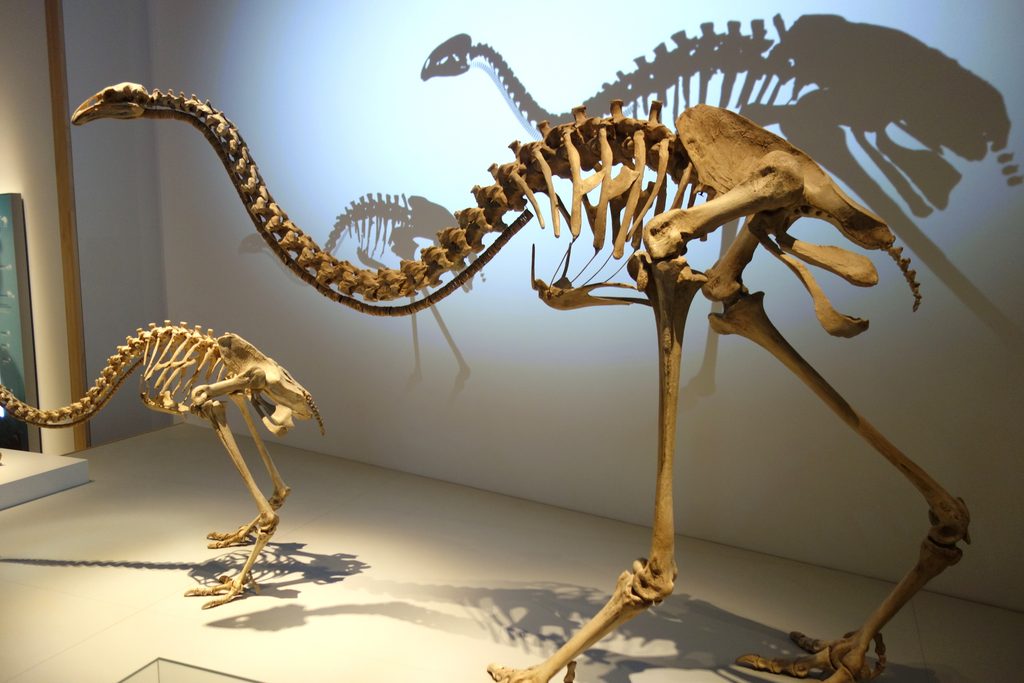
Imagine walking through the forests of New Zealand centuries ago and encountering a bird towering above nearly everything around it.
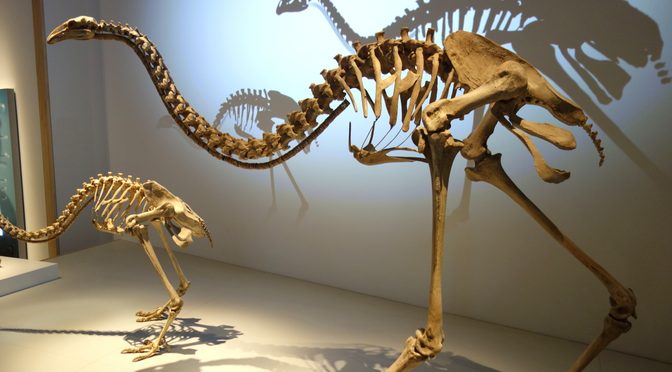
The giant moa was among the largest birds ever to exist. These flightless giants were part of a remarkable group of birds that disappeared following human settlement of New Zealand.
Today, their bones, preserved remains and scientific descriptions offer glimpses into a world that no longer exists.
But could advances in biotechnology someday allow scientists to recreate something resembling these extraordinary animals?
One of the greatest obstacles to bringing back extinct birds involves the way birds reproduce. Unlike mammals, which develop inside their mothers, birds develop inside eggs. That creates unique challenges for researchers attempting to use genetic engineering and reproductive technologies to produce birds with traits from extinct species.
This is where artificial egg technology enters the picture.
A New Frontier in De-Extinction
During our conversation, Pask explained the extraordinary scientific challenges involved in developing artificial systems that could support avian development.
The implications extend well beyond bringing back an extinct bird.
Scientists working in this field are exploring ways to overcome reproductive barriers that have long limited what biotechnology can accomplish with birds. Success could eventually provide new opportunities for conservation breeding and the protection of threatened species.
There is an important distinction between recreating an extinct species and producing an animal with some of its characteristics. De-extinction is an emerging science, and researchers still face enormous technical and biological challenges.
Nevertheless, the possibilities are extraordinary.
Mammoths, Tasmanian Tigers and the Future of Wildlife
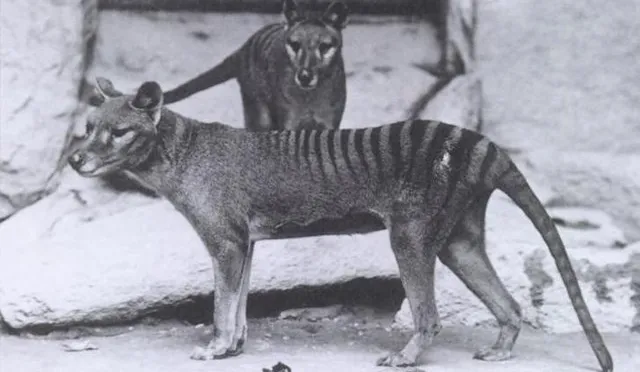
Our discussion also explores other ambitious projects associated with Colossal Biosciences, including efforts involving woolly mammoths and the Tasmanian tiger, also known as the thylacine.
The thylacine is particularly fascinating because its extinction occurred within recorded history. The last known captive animal died at the Hobart Zoo in 1936.
The woolly mammoth represents an entirely different challenge, involving efforts to develop elephants with characteristics associated with adaptation to Ice Age environments.
Both projects raise compelling questions about genetics, ecosystems and humanity’s relationship with the natural world.
But perhaps the most important question isn’t whether scientists can bring back something that has disappeared.
It’s whether the technologies developed along the way can help prevent other species from disappearing in the first place.
Beyond Extinction
At Dark Outdoors, we explore the mysteries of the natural world, from dangerous wildlife encounters to strange chapters in outdoor history and scientific discoveries that challenge our understanding of nature.
De-extinction represents one of the most unusual frontiers we’ve explored.
There is something almost unbelievable about the idea of artificial eggs helping recreate birds that vanished centuries ago. Yet behind that possibility are serious scientific questions and technologies with potential conservation applications.
In this special episode, Dr. Andrew Pask takes us inside that research and explains why its significance could reach far beyond extinct animals.
Whether the giant moa ever walks again remains an open question.
But the science being developed today could help shape the future of wildlife conservation for generations to come.
Chester Moore
Follow Chester Moore and Higher Calling Wildlife® on the following social media platforms
Growing up in the 1980s was an incredible time to be a horror fan.
From classic monster movies and late-night horror television to scary movie magazines, Halloween masks, creepy music and trips to the local video store, horror was everywhere. And I loved it!
My new book, I Was an ’80s Horror Kid, takes readers back to those days through my personal experiences growing up fascinated with monsters, movies and all things spooky.
And now, through Halloween, I’m offering a special deal that brings together two important parts of my creative life: horror storytelling and monster metal.
For just $20, including shipping, you’ll receive a personally signed copy of my new book PLUS a FREE signed copy of the new Freak13® EP,No Longer Living Dead, on CD!
The book is a journey through the horror culture of the 1980s, filled with memories, strange encounters, childhood adventures and stories about how my fascination with monsters eventually helped inspire my music with Freak13.
But there was another side to growing up a horror kid in those days.
The Satanic Panic was sweeping America, and being fascinated with horror sometimes brought unexpected consequences. I share what it was like to experience that atmosphere firsthand, survive some difficult situations and eventually find my own path to faith.
At its heart, this is a book about growing up, discovering who you are and remembering a time when horror was something you found on VHS tapes, magazine racks and late-night television.
FREE Bonus: Freak13 — No Longer Living Dead
As an added Halloween bonus, every book ordered during this promotion comes with a free copy of the new Freak13 EP, No Longer Living Dead, on CD.
Freak13 is my Texas monster metal band, and this new release brings some of our classic material back to life in a different way.
The EP features four Freak13 classics performed unplugged, plus one brand-new studio track.
Track Listing:
New Orleans (Unplugged)
Swamp Devil (Unplugged)
They Don’t See It (Unplugged)
Jackal’s Daughter – Crystal Lake (Unplugged Medley)
No Longer Living Dead (Brand-New Studio Track)
The unplugged recordings offer a different take on songs from the Freak13 catalog, while the title track marks the band’s return with new studio material.
Halloween Special — Only $20 Shipped!
From now through October 31, you can get both the book and CD for one special price.
Your Halloween package includes:
A personally signed copy of I Was an ’80s Horror Kid
A FREE signed No Longer Living Dead Freak13 EP on CD
Shipping included in the $20 price
Please note: This is a preorder offer. Books are expected to arrive by October 25, with orders expected to begin shipping shortly afterward.
Whether you grew up loving horror in the 1980s, enjoy the strange stories featured on Dark Outdoors or appreciate some good old-fashioned monster metal, this is a fun way to celebrate Halloween.
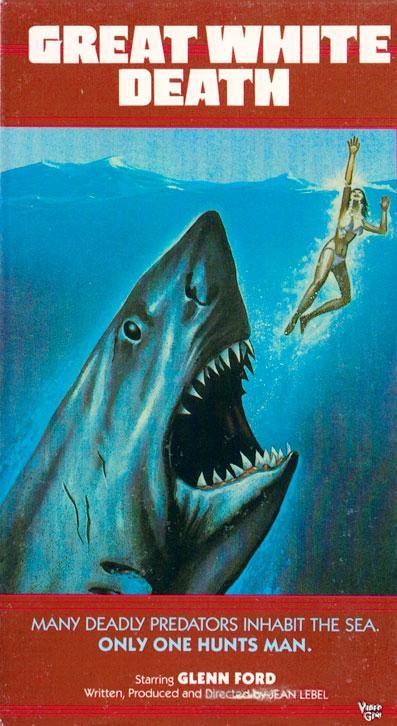
There are images you see as a kid that never completely leave you. For me, one of them came from a strange 1981 shark documentary called Great White Death. I was already fascinated with sharks, and although this movie wasn’t formative for me in the way Jaws or the work of Jacques Cousteau was, it definitely fed that fascination. There were enormous sharks, divers entering dangerous waters, frightening attack accounts and that almost otherworldly mystery surrounding what might be swimming beneath the surface.
Then there was the human skull.
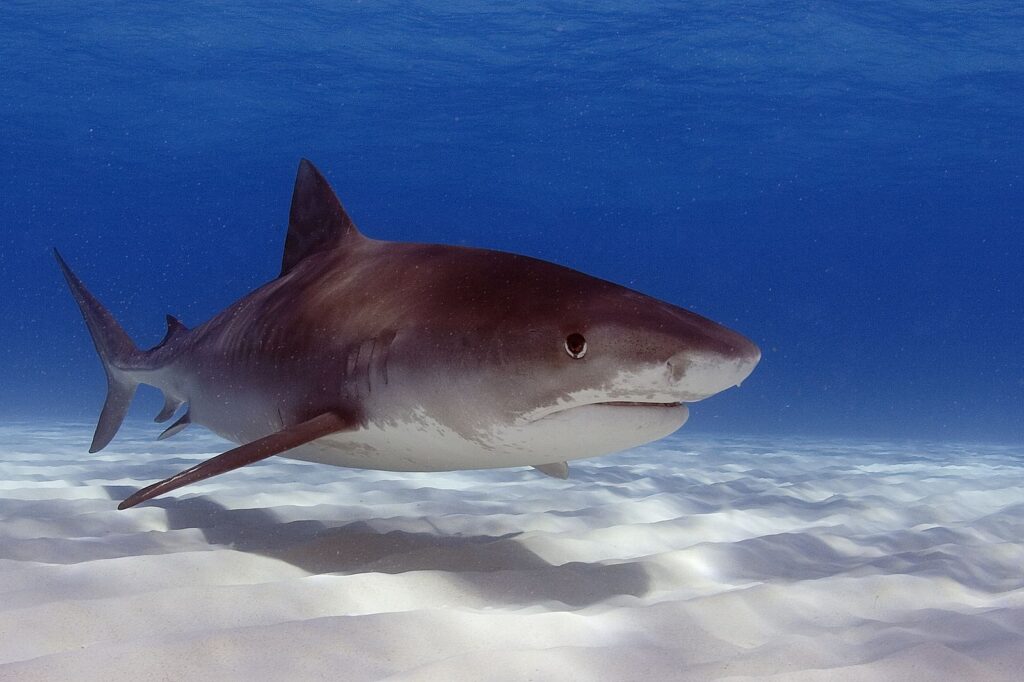
During a segment involving shark-control operations in South Africa, Great White Death shows viewers what the narration says is a human skull recovered from a large shark. The narration describes it as belonging to someone who had died only days earlier. The animal visually associated with the sequence appears to be a tiger shark, although the narration itself does not specifically identify the species.
As a kid, I wasn’t sitting there contemplating documentary ethics, editing or whether something had been reconstructed for the camera. I was looking at a human skull that the movie was telling me had come out of a shark. That’s the kind of thing a kid fascinated with both wildlife and the darker side of the world remembers.
Watching Great White Death decades later raises questions I never thought to ask back then. What exactly were we watching? How much was straightforward documentary footage? How much was reconstructed? And was that human skull really removed from the shark we were being shown?
Welcome to one of the strangest files in shark-film history.
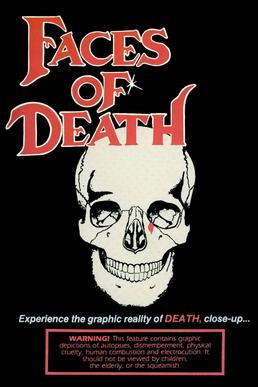
The bizarre history of Great White Death goes beyond the film itself. In a special episode of Dark Outdoors, Chester Moore takes a deeper look at this unusual production, where the blockbuster influence of Jaws collided with the disturbing world of Faces of Death.
Great White Death: When Jaws Met Faces of Death is available now on Dark Outdoors.
Released in 1981, Great White Death was written and directed by Jean-Patrick Lebel and narrated by legendary Hollywood actor Glenn Ford. Ford’s familiar, authoritative voice adds an interesting dimension to the production because even some of the film’s most sensational claims are delivered with the seriousness of a traditional wildlife documentary.
The movie begins with a genuinely intriguing premise. Humanity had reached the moon while vast portions of our own oceans remained mysterious, and sharks are introduced as creatures that have occupied an unusual place in the human imagination, sometimes revered and sometimes feared.
When the great white takes center stage, however, things get considerably darker. The shark is described as an exterminator, monarch and “master pirate of the deep,” while the film repeats claims about enormous 30-foot great whites and emphasizes their ability to inflict devastating injuries. Coming only six years after Jaws turned the great white into perhaps the ultimate real-life horror icon, Great White Death wasn’t shy about tapping into the fear surrounding these animals.
Some of the language sounds extreme today, but the underlying danger should never be dismissed. Great white sharks are potentially dangerous animals. People have been killed, survivors have suffered catastrophic injuries and some have lost limbs. I never want to promote shark conservation in a way that minimizes what attack victims or their families have experienced.
We don’t have to pretend a great white shark is harmless to appreciate one.
The Attack That Needed No Horror Movie
The testimony of diver Henri Bource is one of the most powerful parts of Great White Death precisely because it doesn’t need much embellishment. Bource survived a horrific shark attack in Australia in 1964, and in the film he describes diving around seals when the animals suddenly disappeared. Shortly afterward, a shark struck.
Bource describes the impact as being like getting hit by a train. The shark grabbed him, pulled him underwater and shook him violently before he eventually broke free and made it toward the surface. His leg had been severed.
That’s real-world horror. There is no need for special effects or theatrical blood when a survivor is sitting in front of the camera describing something that actually happened to him. Yet Bource’s story becomes even more interesting because the attack didn’t turn him against the ocean. He recovered and eventually returned to diving because he still loved it.
I think there is something important in that. Acknowledging the tremendous power of sharks doesn’t require hating them, just as appreciating sharks doesn’t require denying their potential danger. Bource knew what a shark could do in a way very few people ever will, and he still returned to the sea.
The Faces of Death Atmosphere
Anyone familiar with the VHS era might notice another resemblance while watching Great White Death. At times, the movie feels like a shark-centered cousin of the notorious Faces of Death, released in 1978. That movie became infamous for combining genuine footage with staged material while presenting it all with documentary authority, creating an experience where viewers weren’t always sure where reality ended and filmmaking began.
Modern descriptions of Great White Death have made the comparison directly, particularly in discussions of apparent recreated shark attacks. I looked for a direct production connection between the two films and couldn’t find one. The available credits indicate different writers, directors and producers, so the connection appears to be stylistic rather than a case of the same filmmakers creating both productions.
That similarity still makes sense. The mondo and death-film style thrived on giving viewers the feeling that they were seeing something forbidden, dangerous and perhaps a little too real. Genuine footage could be mixed with reconstruction and sensational narration without the clear lines audiences might expect from a modern documentary.
Sharks were almost perfect subjects for that treatment. The animals themselves were real, their tremendous predatory capabilities were real and fatal shark attacks were real. Add an ocean where almost everything happening beneath the surface was invisible to the audience, and filmmakers had the perfect environment for building fear.
Then Great White Death shows us a human skull.
The Tiger Shark and the Skull
As noted earlier, during the South African shark-netting sequence, the film shows what its narration claims is the skull of a recently deceased human recovered from a large shark caught in the nets. Visually, the shark associated with the sequence appears to be a tiger shark, although the film’s narration doesn’t identify the species.
Tiger sharks certainly have the biology to make such a story plausible. They are large, tremendously powerful and opportunistic predators and scavengers capable of consuming an extraordinary variety of prey. Human remains being consumed by a large tiger shark is therefore not something that would be biologically impossible.
That doesn’t prove what Great White Death shows us.
I have not found reliable independent documentation identifying the person whose skull appears in the film, establishing all of the circumstances under which it was supposedly recovered or conclusively demonstrating that it came from the particular shark shown on screen. Considering the mondo-style presentation of the film and descriptions of some sequences as recreated, I think those questions are worth asking rather than simply repeating everything the movie says as fact.
At the same time, I haven’t found evidence proving the skull sequence was fabricated either. That’s an important distinction. More than four decades later, there simply isn’t enough documentation available for me to confidently tell you exactly what happened.
And somehow that makes the scene even stranger.
What Exactly Were We Watching?
That uncertainty runs through parts of Great White Death. There is unquestionably genuine wildlife footage in the movie, along with legitimate survivor testimony and real encounters with sharks. Modern descriptions of the production, however, have also characterized portions of its shark-attack imagery as recreations.
Rather than simply labeling the movie fake, I think it’s more interesting to view it within the filmmaking culture that produced it. Documentary footage, reenactments, shocking imagery and dramatic narration could all occupy the same production, particularly within the mondo tradition.
The human skull sequence represents that ambiguity better than anything else in the movie. Watching it as a kid, there was no reason for me to question it. A documentary told me a human skull had been recovered from a shark, showed me a skull and showed me a shark. That was enough.
Today I want to know more.
Was the skull actually recovered from that shark? Was it definitely a tiger shark? Was the sequence presented exactly as it happened, or was footage assembled to create a more dramatic narrative?
Those questions don’t make Great White Death less interesting to me. They make it considerably more interesting.
Then the Movie Starts Defending Sharks
This is where Great White Death takes a turn that people judging it solely by its title might never expect.
After spending much of the film emphasizing attacks, enormous jaws and the frightening capabilities of sharks, the narration begins questioning the idea that sharks are simply mindless killers. It says sharks aren’t indiscriminate killers and eventually discusses their importance to marine ecosystems, even referring to the shark as a “champion environmentalist of the sea.”
For a movie called Great White Death, that’s quite a twist.
The science of shark ecology has advanced tremendously since this film was made, and some of the movie’s individual claims haven’t aged particularly well. The larger concept, however, remains important: sharks have a place in marine ecosystems, and removing predators from those systems can have consequences.
That is a message I strongly support.
Through GulfGreatWhites.com and the Gulf Great White Shark Society, we advocate for shark conservation and for a greater understanding and appreciation of sharks, particularly the great whites and other large species inhabiting the Gulf of Mexico. That doesn’t mean pretending these animals are something they’re not. I believe conservation works best when we’re honest about wildlife, and honesty means acknowledging both the ecological importance of sharks and the potential danger posed by some large species.
Great whites can be dangerous. Tiger sharks can be dangerous. Bull sharks can be dangerous. Those facts do not make them evil, and they do not mean our oceans would be better without them.
Conservation Doesn’t Mean Making Sharks Cuddly
I think that’s an important distinction because conservation messaging can sometimes overcorrect the sensationalism of the past. For decades, sharks were depicted as almost supernatural killing machines, so there is an understandable desire to push back against that image. But we don’t need to replace one exaggeration with another.
Sharks don’t have to become harmless sea puppies for us to conserve them.
A grizzly bear can be ecologically important and potentially deadly. A mountain lion can be magnificent wildlife and capable of attacking a person. A large alligator can deserve protection while possessing enough power to kill a human being. Sharks should be allowed the same complexity.
In fact, that’s part of what makes them fascinating to me. There are still animals on this planet capable of reminding us that human beings aren’t physically dominant everywhere we go. Enter the ocean and we become visitors in an environment where animals are better equipped to survive than we are.
Respecting that reality isn’t anti-shark. I would argue it’s one of the purest forms of shark appreciation.
The World We Have Been Given
There is another element of Great White Death that hits me differently today. During its discussion of environmental damage, the film turns the criticism toward humanity and talks about our responsibility for the world we have been given.
That idea resonates strongly with my approach to conservation.
Stewardship isn’t limited to animals we find cute, useful or safe. The natural world contains predators, venomous animals and creatures powerful enough to kill us. They are still part of creation, and their existence isn’t somehow less valuable because they make us uncomfortable.
Sharks have survived in Earth’s oceans for hundreds of millions of years. Long before there were beach resorts, surfboards, fishing boats or humans swimming beyond the breakers, sharks were part of these ecosystems.
We are the newcomers.
From Horror Icons to Sharks We Can Follow
One of the biggest differences between the world of Great White Death and ours is our ability to follow sharks in ways that would have seemed almost impossible when the movie was released. Satellite and acoustic tagging have allowed researchers to document individual animals moving tremendous distances, while the public can sometimes follow the journeys of particular great whites.
That has helped change the way people relate to sharks. Instead of an anonymous fin suddenly appearing beside a boat, a great white can become an individual animal with a documented movement history. We can see it travel through huge stretches of ocean, including the Gulf of Mexico, and begin to appreciate the scale of its life.
None of that makes the shark less powerful or potentially dangerous. It simply gives us a better picture of what the animal actually does when it isn’t starring in our nightmares.
That may be one of the greatest changes since I first saw Great White Death as a kid. We haven’t discovered that the great white was harmless all along. We’ve discovered that it is far more interesting than the monster we created.
The Image I Never Forgot
And yet, after everything else in the movie, I keep coming back to that tiger shark and the skull.
Maybe it’s because that scene perfectly captures the strange intersection where Dark Outdoors lives: wildlife, danger, death and unanswered questions. The natural world is capable of producing things every bit as disturbing as fiction, while human storytelling has always had a way of making those realities even darker.
Great White Death gave audiences both.
It gave us legitimate shark footage and survivor testimony alongside sensational narration and material that has generated questions about reconstruction. It gave us blood, attacks and what it claimed was a human skull recovered from a shark, yet somehow the same movie ultimately asked viewers to reconsider whether sharks deserved the monster label at all.
Check out our latest shark PSA with horror icon Brinke Stevens.
Near the end, Great White Death argues that sharks are necessary to the sea and reminds viewers that humans entering the ocean are entering an environment sharks inhabited millions of years before us.
More than 40 years later, that’s the part of the movie I appreciate most. At GulfGreatWhite.com, we advocate for shark conservation because these animals deserve to remain part of healthy oceans for generations to come. We can do that while respecting attack victims, acknowledging legitimate danger and refusing to pretend that large sharks are anything other than powerful wild predators.
Great White Death knew how to sell fear. The title alone tells you that. But buried underneath the mondo-film shock, the attacks, the ominous voice of Glenn Ford and that unforgettable image of an alleged human skull recovered from a shark was an idea that has aged considerably better than some of the film’s science.
The ocean needs sharks.
For Dark Outdoors, I can’t think of a more appropriate lesson. The natural world contains things capable of hurting us and, in rare circumstances, killing us. Respecting that darkness doesn’t mean we have to destroy it.
It means understanding why it’s worth protecting.
Chester Moore
Follow Chester Moore and Higher Calling Wildlife® on the following social media platforms
Halloween is almost here, and I’ve got a special treat for Dark Outdoors readers and listeners!
Through October 31, you can preorder a personally signed copy of my new book, I Was an ’80s Horror Kid, for just $17.95, including shipping.
The book takes readers back to the glory days of 1980s horror, from monster movies and creepy VHS covers to horror magazines, Halloween memories and my firsthand experiences growing up during the Satanic Panic.
This is a preorder special. Books are expected to arrive by October 25, with shipping expected to begin shortly afterward.
There was something special about being a horror kid in the 1980s.
It was an era of late-night monster movies, creepy VHS covers, horror magazines and urban legends that seemed to take on lives of their own.
For kids fascinated by the strange and mysterious, there was no shortage of things to capture the imagination.
I was one of those kids.
From classic monsters to the slasher movie explosion, horror became a huge part of my childhood. I loved the atmosphere, the stories and the excitement of discovering something new and frightening.
But the 1980s also had a darker side that went well beyond what appeared on movie screens.
The Satanic Panic swept across America, bringing accusations, rumors and fear into communities across the country. For a kid fascinated with horror, that atmosphere could make life interesting, and sometimes downright disturbing.
I experienced that world firsthand.
My new book, I Was an ’80s Horror Kid, explores those experiences, from the fun and excitement of growing up surrounded by horror culture to the difficult realities of navigating the Satanic Panic.
It’s also a personal story about growing up, surviving some strange situations and ultimately finding my faith.
Long before I launched Dark Outdoors and began investigating disturbing encounters, unusual wildlife reports and the mysteries that lurk beyond the campfire, I was a kid who loved a good scary story.
That fascination never really went away.
In many ways, the curiosity that drove me to watch monster movies and explore strange stories as a child is the same curiosity that drives my investigations today.
And with Halloween approaching, I thought this would be the perfect time to share that part of my story.
Halloween Special: Signed Copies for $17.95 Shipped!
Through October 31, I’m offering personally signed copies of I Was an ’80s Horror Kid for just $17.95, including shipping.
This is a special preorder offer. Books are expected to arrive by October 25, with orders expected to begin shipping shortly afterward.
If you grew up during the golden age of VHS horror, remember the Satanic Panic or simply enjoy stories about the strange side of American culture, I think you’ll find something to enjoy in this book.
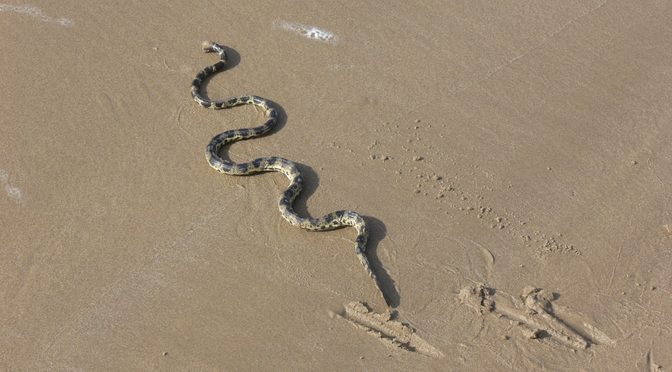
Something strange has been reported swimming in the Gulf of Mexico, and five additional eyewitness accounts are making the mystery even more intriguing.
Last week’s Dark Outdoors® and Higher Calling Wildlife investigation into possible venomous sea snakes in Gulf waters attracted more than 10,000 views. Now new accounts, including one dating back to 1963, are raising fresh questions about what people have encountered beneath the surface.
One witness claims he captured a mysterious black-and-white-ringed snake near Sanibel Island, Florida, in 1963 and showed it to a park ranger.
Another describes pulling up a crab net near the Port of Pascagoula, Mississippi, containing a banded snake-like creature with a paddle-shaped tail.
Other witnesses from Florida and Alabama have reported unusual animals swimming in coastal and offshore waters, including brown snakes and yellowish creatures with strange tails.
Some of these descriptions bear a resemblance to highly venomous sea snakes and sea kraits found in other parts of the world.
But there’s a problem.
True sea snakes have not been verified as inhabitants of the Gulf of Mexico.
So what are these people seeing?
In this new investigation, I examine five intriguing eyewitness accounts and explore possible explanations involving spotted snake eels, chain morays, marine ribbon worms and native Gulf Coast watersnakes.
Could these encounters involve unfamiliar native wildlife, mistaken identities or exotic animals somehow reaching Gulf waters?
With Halloween approaching, it’s a fitting time to explore one of the Gulf Coast’s stranger wildlife mysteries.
The most fascinating wildlife mysteries aren’t necessarily those involving unknown creatures. Sometimes they’re encounters that challenge what we think we know about familiar environments.
These eyewitness accounts raise intriguing questions, but they don’t establish that venomous sea snakes inhabit the Gulf of Mexico. Answering that question will require convincing photographic, video or physical evidence.
Dark Outdoors® is dedicated to examining unusual encounters in the natural world, separating documented facts from speculation and exploring the mysteries that sometimes emerge where people and wildlife cross paths.
Have you ever encountered a mysterious snake-like animal while swimming, fishing or boating in Gulf waters? Share your experience. Photographs, videos and detailed descriptions could help shed light on this extraordinary mystery.
Chester Moore
Dark Outdoors investigates terrifying encounters, unsolved mysteries, true crime and dangerous wildlife—because the outdoors has a dark side.
Follow Chester Moore on the following social media platforms
The chupacabra began as a blood-draining monster in Puerto Rico. In Texas, it became something very different. After years of investigating strange canids—and actually retrieving one alleged chupacabra carcass—I believe science explains much of the mystery. But maybe not all of it.
By Chester Moore
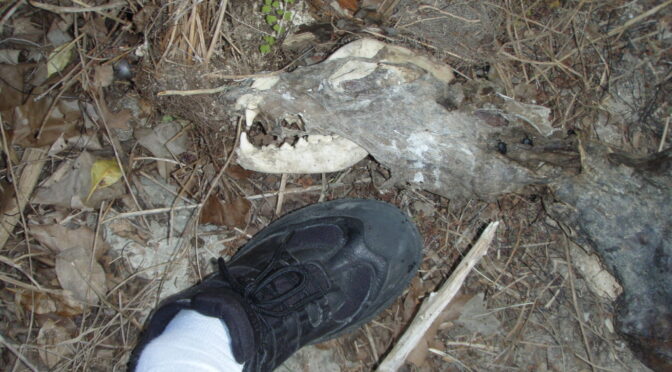
I have a chupacabra skull.
At least, that’s what most people would have called the animal it came from.
The skull has been in my possession for years, the remains of a bizarre, virtually hairless animal recovered after a flash flood. Its body had grayish, wrinkled skin, and its proportions looked strange enough to make anyone encountering it in the woods wonder exactly what they were looking at. I eventually went into the field and retrieved what remained of the carcass.
OLYMPUS DIGITAL CAMERA
Do I believe I have the skull of some undiscovered bloodsucking monster?
No.
But that doesn’t make the story of the chupacabra any less fascinating.
In fact, the deeper I have gone into the subject, the more interesting it has become.
The chupacabra is unusual among famous cryptid stories because its modern legend isn’t particularly old. Reports exploded out of Puerto Rico during the 1990s, where witnesses described something very different from the hairless, four-legged creatures that would eventually become known as “chupacabras” in Texas. Early Puerto Rican reports described something far stranger, sometimes almost alien in appearance, associated with livestock allegedly drained of blood.
By the time the legend reached Texas, the monster had changed.
Listen: The Horror and Science of Chupacabra
I recently explored this strange intersection of wildlife, folklore and firsthand encounters on a special episode of my Dark Outdoors podcast, “The Horror and Science of Chupacabra.”
I get into the famous sightings, the Texas “blue dogs,” mange, coyotes, wolves and hybrids—and the strange skull that has been sitting in my possession for years.
The episode gets into something I’ve come to believe after years of looking at alleged chupacabra photographs and reports: a monster can be very real without being an unknown species.
When Mange Creates a Monster
Take a coyote and remove almost all its hair. Let disease and starvation reduce its body weight. Expose the ribs, exaggerate the appearance of the legs and ears and alter the texture and color of its skin.
Now put that animal at the edge of someone’s property at 2 a.m.
Shine headlights on it.
Suddenly, one of North America’s most familiar predators doesn’t look familiar at all.
Severe mange can transform coyotes, foxes, raccoons and domestic dogs into animals that look shockingly different from healthy members of their species. Hair loss changes our perception of body proportions. Ears appear enormous. Legs seem unusually long and thin. Tails can become almost ratlike, while poor physical condition can produce a stumbling or unusual gait.
That’s important because the animal most commonly presented to me as a Texas chupacabra is a coyote.
Foxes can look even stranger. Their naturally prominent ears become exaggerated when most of their coat disappears, and their eyes can appear enormous when illuminated at night. Even raccoons can become almost unrecognizable after severe hair loss eliminates the familiar mask and bushy coat.
I’ve seen reports presented as mysterious creatures that were clearly animals we already know.
But I’ve also experienced firsthand how convincing the illusion can be.
The Night Something Charged Me
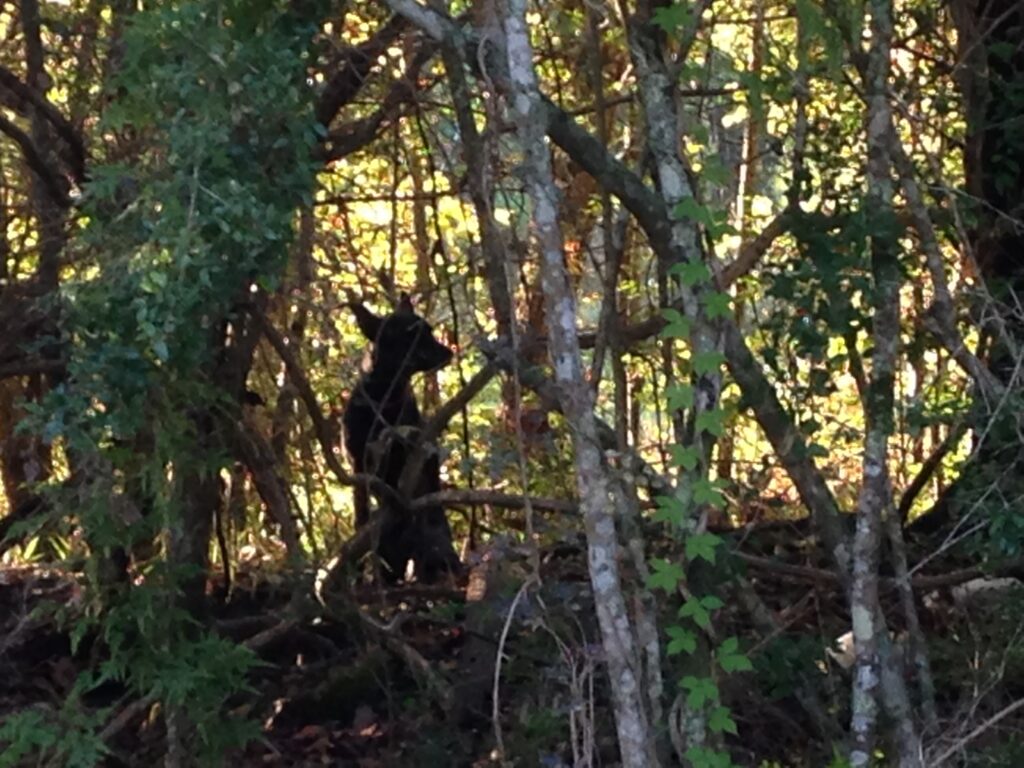
One night I was near a wooded area where I had been conducting red wolf research. I saw something moving low through the brush and initially couldn’t identify it. After I made a howl, the animal answered.
Then it came into view.
In the moonlight I could see an extremely skinny animal with large-looking ears. It circled, growled and eventually ran toward me, getting perhaps 10 or 15 yards away before retreating. When I finally got a good look at it, the mystery disappeared.
It was a domestic dog with an extreme case of mange. I estimated roughly 75 percent of its hair was gone.
But imagine someone else having exactly the same encounter.
You’re standing in the woods at night. Something nearly hairless emerges from the darkness, growls and charges you. You see huge ears, a gaunt body and exposed skin illuminated by your flashlight.
If you’ve heard the stories, you’ve just encountered a chupacabra.
That’s how legends can grow around real animals.
Then I Got a Call About a Body
My strangest connection to the chupacabra mystery began with my friend David Clever.
David encountered the body of an unusual animal following a massive flash flood. When he first saw it, the carcass was bloated and floating in a pool. When he returned later, much of the decomposition process had progressed, but the remains were still there.
He described an animal with no hair, grayish wrinkled skin and body proportions that appeared unusual. Eventually, David contacted me while I was doing research in the Texas Hill Country and asked if I wanted to retrieve what was left.
Of course I did.
I went out and recovered the remains.
And I still have the skull.
Looking at it now, I don’t believe I discovered an unknown species. My best assessment is that it belonged to a large coyote or a medium-to-large domestic dog, although the possibility of some degree of canid hybridization is interesting given the history of wolves and coyotes in the region. What I don’t believe is that hybridization itself explains the strange hairless appearance.
Mange does that very effectively.
The Strange Texas “Blue Dogs”
Texas added another layer to the chupacabra legend when strange hairless canids began attracting widespread attention.
These animals are sometimes called “blue dogs” because of their unusual gray-blue skin.
That appearance has helped fuel speculation that they represent an unknown canine, some unusual hybrid or perhaps the real identity of the chupacabra.
But research discussed in my podcast points toward a far less supernatural—and biologically fascinating—explanation.
Work cited in the transcript from researchers examining alleged chupacabra specimens identified animals including raccoons and domestic dogs. All suffered from mange, with extremely limited hair, thickened skin and a dry, wrinkled appearance. The discussion also noted secondary bacterial infection associated with heavily damaged skin and the unusual coloration observers sometimes report.
That combination can produce an animal that looks like it shouldn’t exist.
But it does.
What About Wolves and Coyotes?
There is another component of the Texas mystery that deserves attention: canid genetics.
Coyotes and wolves have a complicated genetic history in North America. Hybridization has occurred in different populations, and that can produce animals whose physical characteristics don’t always match the textbook image of a coyote or wolf.
That does not mean wolf-coyote hybridization creates chupacabras.
The transcript specifically addresses that misconception. Whatever genetic mixing may occur among canids, I don’t believe hybridization explains why these animals lose their hair and develop the bizarre appearance associated with Texas chupacabra reports.
Mange remains the far more compelling explanation.
But What About Puerto Rico?
This is where I hesitate to declare the entire chupacabra mystery solved.
The original Puerto Rican story isn’t identical to what developed later in Texas.
The very name chupacabra—”goat sucker”—grew out of reports involving livestock allegedly attacked and drained of blood. The legend exploded during the 1990s, but accounts of mysterious livestock deaths and supposed blood-draining creatures in Puerto Rico preceded the famous chupacabra wave.
Descriptions also evolved dramatically.
The original creature of Puerto Rican folklore could be portrayed as something almost alien. The Texas version became a strange hairless canine.
Those may be two very different phenomena that acquired the same name.
That’s why I’m willing to say I think I know what most Texas chupacabras are without pretending I’ve explained every unusual report ever associated with the name.
The Chupacabra Is Real—Just Not the Way You Think
My position on the chupacabra might sound contradictory.
I think the chupacabra is real.
I just don’t think most of the animals being photographed, filmed and found dead in Texas represent an unknown species.
They’re real animals suffering from real conditions that can transform them into something almost unrecognizable. In many cases we’re probably looking at coyotes, foxes, raccoons or domestic dogs suffering from severe mange. That’s also the conclusion I reached about the mysterious skull in my possession.
But knowing that doesn’t make encountering one at night any less unsettling.
I’ve had one charge me.
I’ve retrieved the carcass of another.
And I have its skull.
Sometimes the most frightening creatures in the woods aren’t monsters at all.
They’re familiar animals that, for one reason or another, no longer look familiar.
Hear the complete investigation and my firsthand stories in “The Horror and Science of Chupacabra” on Dark Outdoors.